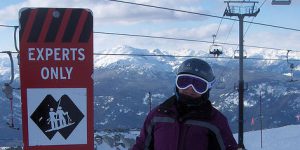
There’s a real problem in the blog world right now.
And it’s not what you think. It’s not about traffic, sales, or leads.
It’s about credibility.
With millions of blogs on the internet, people want to know that they’re reading the right people.
But don’t stress…
…Because you don’t need to be an absolute expert to run a blog that gets traffic and makes sales. You just need to know what you’re talking about.
Let me explain.
The Two Types of Experts
What do your local newscaster and Jared from Subway have in common?
They’re both relative experts.
Generally speaking there are two different types of experts:
- Absolute Expert
- Relative Expert
An absolute expert is the person who has put in their 10,000 hours of practice, and knows their skill or topic inside and out. They can talk about their craft at a high level, and there are generally few questions they don’t have a good answer for.
Jimi Hendrix was an expert at guitar. Chris Pearson is an expert at WordPress theme development. Pete Sampras is an expert at tennis. They each know more about their craft than 99.99% of the population.
A relative expert rather, is someone with a perceived level of credibility due to the fact they know more about a subject than the person they’re talking to. The level and depth of the knowledge of a relative expert can vary greatly from person to person.
For instance, we often look at the nightly newscaster as an expert, because they always appear to be knowledgeable in politics, business, or whatever else is going on in the world. The reality is the only thing they’re actually an expert at is reading the teleprompter. Yet, because they generally know more than we do about world happenings, to us, they appear to be an expert.
Or what about Jared? Millions of Americans look at him as a weight loss expert because he was able to lose over 100 pounds by sticking to his Subway diet. What was he actually an expert in? Eating the same thing every day and exercising – not exactly expert status in my book.
Look: You Don’t Need to Be An Absolute Expert
Every day I see people who don’t pursue a business or skill because they aren’t an “absolute expert”. Often times there’s a mindset that if you don’t know everything, you don’t know anything.
Totally not the case.
As long as you aren’t playing yourself off as someone who is an absolute expert, and you’re honest with yourself and others about your abilities, there’s a ton of opportunity for the relative expert in the world of entrepreneurship.
You could start learning a skill today, and within a couple weeks be able to help a lot of people with some of their basic problems. You just need to have the motivation to do it.
Last year I quit my job and moved to Thailand to start a business. I chose search engine optimization and in a matter of weeks was already making a significant impact for my first client. It only took about 8 weeks before we saw our first $5,000 sale due to me learning the basics of SEO.
Am I the worlds best at it? Hardly. Do I know enough to provide significant value for someone who knows nothing about how to properly optimize a website? Absolutely.
To become a relative expert at something, you just need to be willing to devote enough time to learning the essentials of the trade, and then get hands on with your own projects to put the knowledge to practice.
This can be said for just about any business that can be run from a computer, whether it be web design, development, copywriting etc.
So that said, how do you use the idea of being a relative expert to actually boost your credibility?
The Three-Step Formula for Becoming a Relative Expert
1. Prove that you actually know something.
This can be as simple as a blog post detailing tangible results, or by putting up a new website that you designed and coded all by yourself. Once it’s established that you know a little bit about a given topic, it isn’t hard to make the leap to relative expert status.
2. Offer Help.
Whatever area you decide to specialize in there are always beginners looking for assistance. Use Twitter Search to find them if need be. Be willing to offer as much advice and help as you can, while asking for nothing in return. If you do this well, to them you’re immediately a relative expert. Word of mouth is a powerful thing, so by helping a handful of people it may not be long before your reputation grows.
3. Continue Building Your Skills.
Don’t trick yourself into believing you’re an expert because you know some basics. That isn’t good for you or anyone else. As you become recognized in your field, you need to challenge yourself to up your game, and continue adding value. The only way to do that is to consistently be learning and building your own knowledge.
The Bottom Line
You don’t have to know everything to be useful, you just need to be confident in what you do know.
That said, if you make a commitment to gain knowledge in a subject matter of your choice, and stick with it, it may not be long before you’ve got the know-how and the reputation to build a sustainable business around it.
About the Author: Sean Ogle is known for his blog Location180 where he documents his experiences of being location independent. After quitting his cooperate job, Sean built his business traveling. To learn his methods, check him out at Location Rebel.
If you enjoyed this article, enter your email below to get free updates!
{ 55 comments }
Damn Sean, I’d say you’re an expert on writing this post, nice work! Love the recommendation to continue building skills, I can use a reminder of that every now and then.
Thanks man! I’ve been developing a course around the topic, so it’s something I’m getting to know pretty well.
Same here, nice work.
You just have to add some value, that’s all.
Sean,
Good thoughts. You make an important distinction. As a speaker, I am often introduced as a social media expert and the first thing I do is correct them and say, I am a social media enthusiast specialising in using the tools to build customer relationships. Claiming that you are an expert in a medium that is so new and ever changing can actually harm your credibility. But the title of “relative” expert is a good one. Perhaps I should rethink my introduction.
Deborah
Theres a big distinction there that I think most people fail to realize. The word expert gets tossed around a lot, but the reality is that there are very few absolute experts in the world.
That said I think as long as people are upfront about what they do know, and what they don’t, using the term expert is ok.
I have to say I completely agree with this, and would go further to say that absolute expertise can be counter-productive. I suspect the real money is using a small amount of relative expertise to build authority.
The cool thing about authority is its global due to a “halo effect.” That is, once someone is trusted as an authority on one thing, that person is generally trusted as an authority on everything.
Absolute expertise can also have a disadvantage of narrowing one’s market. If for no other reason than it becomes increasingly difficult to communicate with people lacking the contextual background (i.e., vocabulary) to understand the conversation.
Now, I’m curious to see where this article goes. Will popularity trump age? Only time will tell!
@Deborah – I’m exceedingly cautious in exactly the same way.
I think that’s interesting that you mention the fact in some cases absolute expertise is a disadvantage. At least for me, I’d have the trouble of not having enough broad stimulation in order keep myself interested.
The absolute experts that are able to “dumb-down” their knowledge are the ones that will appeal more broad appeal by relating to both experts and novices alike.
Thank you for that encouraging post. I’ve been holding myself back because I know I’m no absolute expert, but compared to most people, I’m a relative expert when it comes to health and nutrition.
I think it’s time I had more confidence in myself and started marketing that knowledge. The only problem with that is, lacking funds, I also have to become a relative expert in blogging and assorted computer technologies and software.
Thats the beauty of the internet, everyone can have a voice – for better or worse
Good luck with the learning process!
I love this angle. When I was starting my first site I was scared how is it going to work, cause although I knew a loooot about the topic, there is always someone that knows more. Then I realized my target are beginners and I know more than them. That got me to relax a bit and that site was a success very quick.
You bring up a really good point, the audience is really important. By recognizing who your audience is, it makes it much easier to have confidence in your abilities as a relative expert.
Now if you’re writing to a panel of your biggest mentors on the subject, it might be a different story…
Thanks for this great article. We have been in the process of creating our own new niche of expertise and this has given me some good ideas for furthering that goal!
Glad you enjoyed it. Good luck!
Great article!
Another way to gain expertise is to stay up to date with what other experts in your field have to say. Google blog alerts should be a great toll for this but for some unknown reason, it has stopped working for me. I get news and web alerts but no more blogs
Couldn’t agree more. That’s one of the main pieces of advice I give people when their trying to learn a new skill and become an expert. I’ve used Google web alerts a lot in the past as well, and now that you mention it, I haven’t seen them in awhile…hmmm, might have to look into that!
Sean You mean like Obama and the congress of the USA?
Ha, something like that…
I’ve long loved this concept, ever since ….er, someone (I can’t remember who it was! Johnny Truant? Maybe?) brought it up a few years back but your construction of it — absolute expertise vs. relative expertise — makes it so much more accessible. We all tend to get caught up in the feeling of “not READY yet!” panic, but taking imperfect action now has some serious power in it. Great post.
I’d rather fail 100 times from taking action, than not take action at all.
Especially considering by the time I’m done failing, I probably really will be a relative expert
Hey Sean… Really well done. I don’t normally read blog posts word-for-word, but when I do, I like to leave a comment.
Happy to hear you felt compelled to read the whole post!
This really was a great article. I especially like the point about helping others that might be trying to learn as well. I’m looking forward to implement that in my business as well.
Keep me posted as you implement the ideas, interested to see what works the best for you.
Great post, I encourage people all the time to pursue a passion or developed skill set and yet just about everyone is afraid to. I have a food blog I run as a hobby and I am by no means an expert on food, but I do know more than most and my enthusiasm and energy is conveyed in the posts. You cannot fake energy and passion there is no need to fake being an expert. I love reading about social media “experts” as rapidly as things are changing there are no 10,000 hour rule experts, it’s just not possible, but no shortage of people claiming to be experts.
As Chris said above following the trends and watching others is a great way to keep up to date and have an edge.
Enthusiasm and energy are two of the most underrated aspects to business. If you have these two traits, it can make up for a lot of other lacking areas.
I think Derek is an excellent example of this. Set aside the fact that he’s more knowledgable on sales and conversions than almost anyone else I’ve seen, but his videos radiate enthusiasm and energy – makes it impossible not to get drawn in.
I would love to see a follow up article about getting your first client as a relative expert along with a case study or two. People looking to leave the 9-5 and go indie often fall into to two categories. Those not sure of their skill set, and those with a skill set not sure how to market it to paying customers.
Sean I would love to know how you over came that step.
Great article.
A concept I was just writing about this morning is leveraging the relative expertise you already have to facilitate building rapport in new, potential business relationships.
For example, I’ve played tennis my whole life – i’m a relative expert already. If I can find people who are interested in that expertise or perhaps are tennis players themselves, it makes building rapport WAY easier. And in my experience rapport is almost always the foundation of new business relationship.
I’ll see what I can do about the follow up article. Thanks for the thoughts!
Thank you for this, Sean! I’m excited to check out Location Rebel, too. Thailand is a beautiful country. Good choice. (I was there twice in 2009)
Point #2 was a great reminder for me. Going to spend some time this week looking to help people out.
Thanks again!
Thanks man! I’ll be back in Thailand for a bit next month, really looking forward to it. Hope you were able to spend some time trying to help others
Solid stuff Sean, keep learning is definitively the key here. So many people learn something and then don’t evolve as the industry does and get left behind. This post motivated me to try a little harder at helping my clients and becoming a “relative expert”.
In my last “real job” that was the biggest struggle was a lack of willingness to evolve with the industry and make necessary changes to the fundamental operation of the business.
Part of being a relative expert is being able to evolve with the industry you’ve chosen, those that do will have a huge advantage moving forward!
Hey Sean,
I loved the concept of Relative Expert.
I think there should be 2 milestones in gaining expertise.
1. Relative expertise
2. Absolute expertise.
One should not be demotivated by the thought of putting 10,000 hours to gain absolute expertise. He can start making money by gaining relative expertise as you do
Very true – and hopefully whatever you’ve chosen to focus on is something you enjoy, so that 10,000 hours isn’t nearly as daunting or as painful as it might seem to someone on the outside.
Hi Sean,
Absolutely rocking classification of one’s expertise, never thought of it at this basic level. Totally agree with your point of relative expertise. Afterall no one becomes absolute expert overnight. According to me, absolute expertise comes from the experience that we gain through relative expertise.
So we should not shy from implementing our relative expertise for one’s own growth as well as for helping others!
Thanks for this motivational piece Sean!
You bring up a great point, Vrishali, because no matter how much you “study” you can never gain the “experience” it takes to be an absolute expert until you put the study into action, make some mistakes and really learn the ropes.
This alone should give a person encouragement to take whatever level of knowledge he has and put it to work because this is how true absolute expertise is gained.
Great post, Sean.
Really good thoughts.
You have to take things past a theoretical level to become an expert, and the only way to do that is to actually do it, and fail.
So there really is no excuse not to get out there and just start doing – regardless of the level you think you’re at.
Hey Sean,
You said we should be willing to offer help and advice — as much as we can — and ask nothing in return. To play devil’s advocate for a minute here, have you ever read design expert Jessica Hische’s flow chart, Should I Work For Free?”
The main argument against working for free, of course, is that you are devaluing your “professional” own work/time, whether “expert” or not, so you can’t expect others to value it.
Thanks for the article.
Agreed, Sheri. Then it becomes very difficult to draw the line on when it is time to start charging for your knowledge and skills. People who’ve been getting it for free think they should always get it for free. And they can be very disrespectful of your time if you have other paying customers.
Thanks for the thoughts, I actually haven’t seen that particular chart, but I am familiar with the concept.
I think there is a big distinction to be made between working for free and offering help. You can offer advice or help for free, and that doesn’t devalue anything. If anything your willingness to help someone out adds more value to your ability and your personal brand.
If I take the time to respond to a few tweets about SEO for instance, that could eventually lead to a request for actual work, which is a different story.
Personally, I think there can be value in doing work for free as well, but that’s just my own opinion and a different discussion altogether
Interesting article yes but Sheri has a point; after more than 16 years of owning my own business I can tell you the ones that want something for free never expect to pay and though they might appreciate expertise; I’ve found that can be detrimental. I had one morning a few months ago when my DM box was filled with requests and I spent half a day being ‘helpful.’ I realized that my reputation was going to suffer more detriment from that than good and my schedule was certainly suffering. Once I started notifying people (including clients!) that they needed to email me for help with their websites so I could track billable hours…they stopped. Best thing I ever did.
I’ve owned a web development company for 16 years; ever since Netscape developed a browser that saw the internet in a new way; with pictures. I would say I do have expertise in my field and the worst to come of the availability of ‘products’ to make web development easier is that the field is littered with people that have no business claiming that designation. I know…I end up too often in the rescue business. While expertise might not be the requirement, I also think a lot more thought has to go into offering yourself as a relative expert. Experience, knowledge and devotion to customer service; solid business blocks that too many fail at miserably in their quest that puts easy money ahead of any level of expertise.
I really appreciate your insights Barbara. Both as they relate to free work and proclaiming yourself as an expert.
To the former, I agree, too much (or any) free work can be a detriment, especially when you already have an established business. However if your 16 years of experience were only 16 days, you might consider a different approach. I a lot of ways a blog is just a way of doing work for free. The writer is giving out useful information (hopefully), with nothing directly in return.
As to your point about establishing yourself as an expert too early on, it’s a very good one. It was my biggest concern when writing this piece, and I think it’s important people are up front about what they know and what they don’t – or else risk unhappy clients who turn to you for a rescue
Excellent article! Building relative expertise is one of the fastest ways to build authority, and that’s what really matters. People don’t look to experts to solve their problems, people look to authorities.
Great distinction about experts and authorities, thanks for bringing it up!
Sean, you mention using Twitter search to find people to whom you can offer help. Also LinkedIn. I answer questions on LI all the time, just for this reason. A LinkedIn widget on my iGoogle page displays the latest questions asked in my categories (Small Business Growth), to remind me.
Answering such questions has the added benefit of being the seed of many of my blog posts. (Exactly what I’m doing here!)
@sheri. Should you work for free?
– “The more I give away, the more I sell.”
– “Tell ‘em how to do it for themselves, so that they will hire you to do it for them.”
It isn’t our information that sets us apart, but how we can help others apply that info to their situations. That’s what we get the big bucks for.
So give away pennies to attract dollars.
Many experts give out tantalizing tidbits, but keep all their useful info hidden behind their paywall. I don’t think this works–unless they’re already famous. Instead of impressing me with their expertise, they strike me as flim-flam artists.
Really good points Mike! I’ve gotta admit that LinkedIn is one area where I’ve really slacked. I need to build up my knowledge a bit more and leverage that community.
This post rocks my world. I have a very broad but very narrow niche at the same time. I am doing extremely well. I am not an expert but I am an expert. It’s weird. I have experience which is what really counts!
Great job with the post!
Goes back to the point of being an authority > being an expert. Well done!
Sean!
Killer post mate. Very timely too, as lately i’ve been thinking the following :
1. I’m a jack of almost all trades. I know a modest amount about a lot of subjects.
2. Specialization bores me. I am excited by tangents and learning, picking up new things and discovering how they work.
3. Because of 1 & 2, i’m not a professional in any area.
Guess it goes to show that a wider niche of expertise can pay off just as well.
Thanks for the inspiration mate!
Anthony.
I’m the same way – and if you can find a way to leverage that, it puts you in a great position because you don’t need to worry about getting bored all the time – which was a struggle for me in the past.
I think this blog from Sean Ogle expresses a unique perspective on learning and sharpening self tools. We always want to learn and be an expert but as the Sean indicated there are two levels and we have to keep this mind as we learn. I would add one thing to the subject is every one should have at least one skill that is considered an Absolute expert. Salah Shakir
I’m not sure I’ll (or most people) will ever reach the level of absolute expert – and I’m ok with that. But for those who are there, I have a tremendous amount of respect.
Sean, I’m learning alot more about WordPress through purchasing my Thesis than I expected. I’m learning about outbound links and I don’t have any at this point on my site. But I’m refocusing my business on being a ‘closet organizing expert’ providing closet organizing, closet design and closet installation services. I’ll be marketing to female small business owners.
Women tend to judge themselves so harshly, this is definitely a perspective I want to share with my clients. My new site isn’t live yet, but yours will be one of my first outbound links. Thanks .
Sounds like you’ve done a fantastic job of narrowing down your niche and target market. That will go a long way as you continue to build your business!
I agree with you Sean. I think that one has to look credible and trustworthy to be heard. It is not important that you know all the answers. What is important is you know the answer to the problem of your clients.
Jef Menguin
Thanks again Sean! I would say your definitely an expert on article writing. It seems everyone of your post has fire behind it, the kind that makes you want to quit reading half way through just to get started! Great work with Location 180.